IB Geography • Section 1
Geophysical Systems
Geophysical systems and the physical processes that create hazard events
Restored from the original AdornGeo Weebly page • syllabus order preserved
Mechanisms of Plate Movement
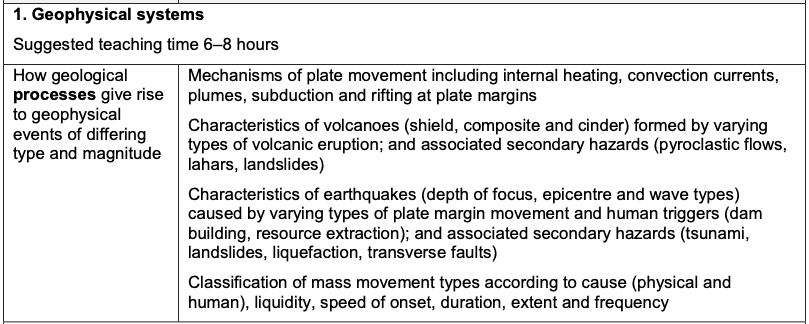
Mechanisms of plate movement including internal heating, convection currents, plumes, subduction and rifting at plate margins.
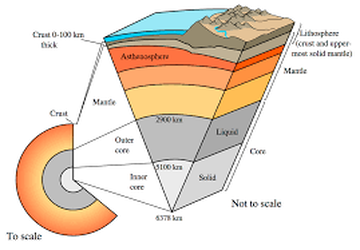
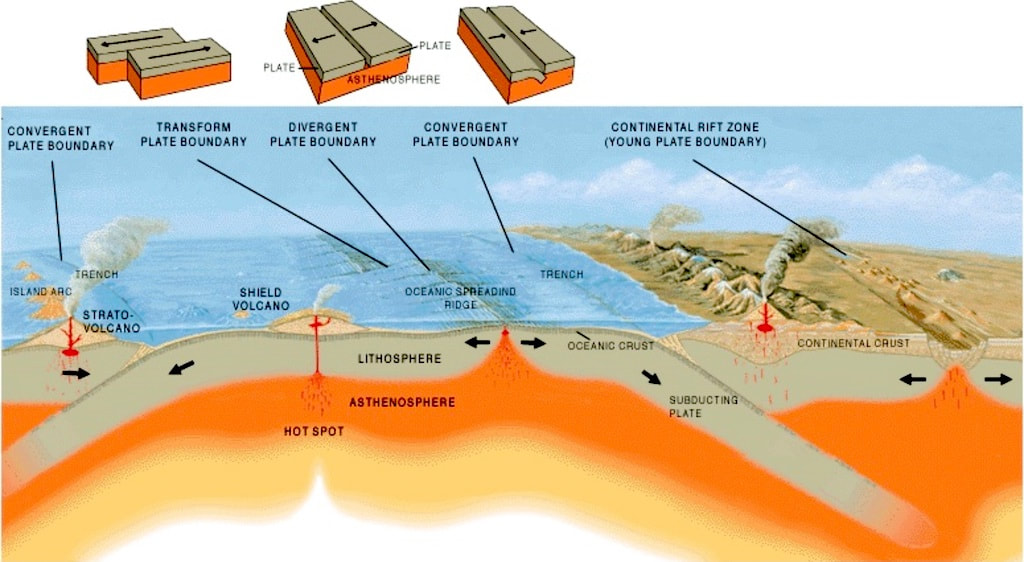
Begin beneath the crust: connect Earth’s layered structure and internal heat to mantle movement, then use boundary cross-sections to explain why plates converge, diverge and slide past one another.
- Earth’s internal heat drives mantle convection; ridge push and slab pull help move lithospheric plates.
- Constructive, destructive, collision and conservative margins produce contrasting processes and landforms.
- Mantle plumes create intraplate volcanic chains, while rifting stretches and thins continental crust.
- Plate tectonic theory is supported by continental fit, fossils, palaeomagnetism and the age of oceanic crust.
Build the plate-movement explanation
- Use the activities and embedded reading to label the crust, mantle and core, then add arrows showing heat transfer.
- For each plate margin, sketch the plate motions and annotate the dominant processes and landforms.
- Use the Ancient Earth globe to choose one past reconstruction and explain how its continental pattern differs from today.
- Finish with a six-sentence explanation linking internal heating to one named tectonic landform.
Watch: Plate tectonics: original AdornGeo introduction
Watch: Evidence for plate movement
Watch: Earth’s internal structure and heat
Watch: Convection and plate motion
Watch: Constructive plate margins
Watch: Destructive plate margins
Watch: Collision and conservative margins
Watch: Mantle plumes and hot spots
Watch: Rifting and tectonic landforms
Quizlet: Plate movement key terms
Characteristics of Volcanoes
Characteristics of volcanoes (shield, composite and cinder) formed by varying types of volcanic eruption; and associated secondary hazards including pyroclastic flows, lahars and landslides.
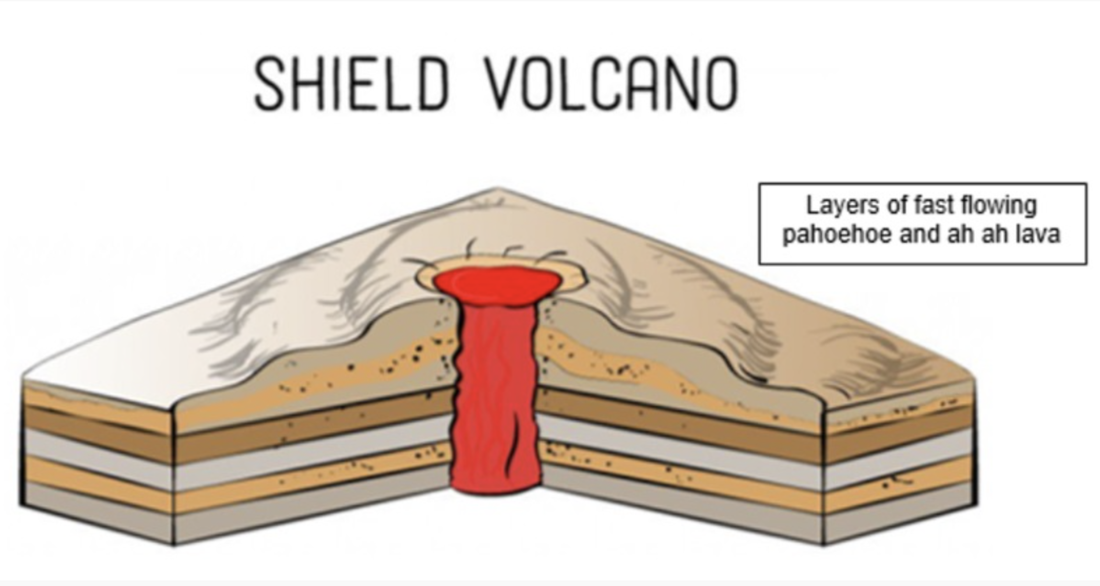
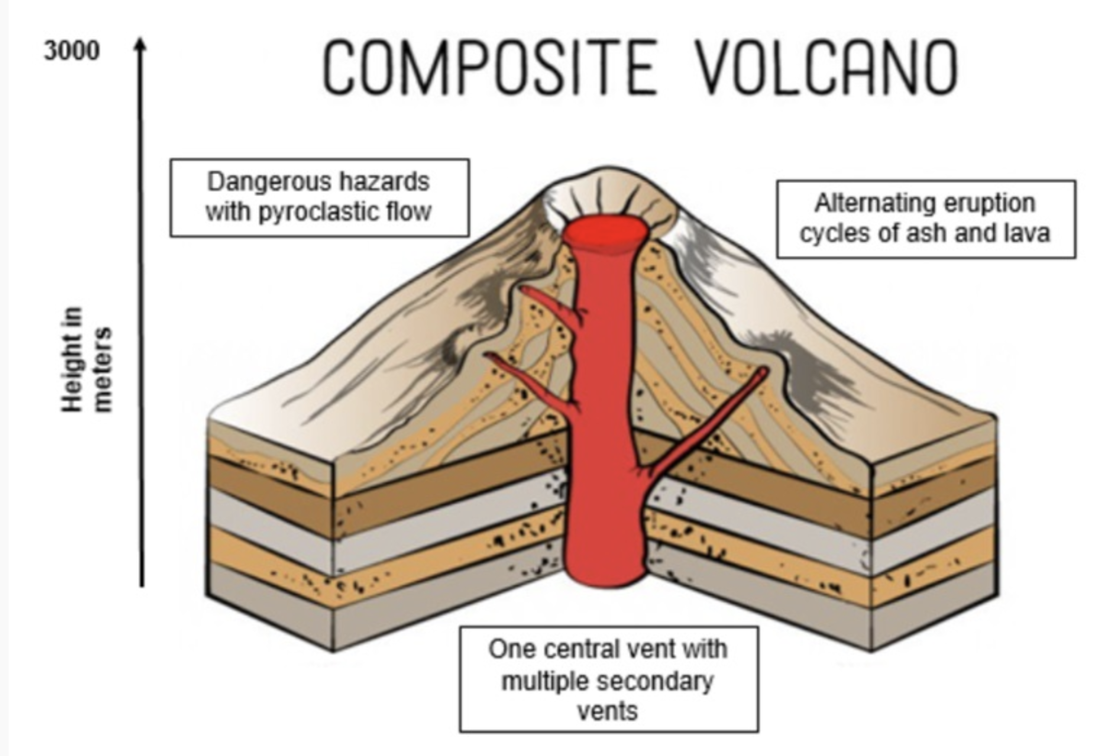
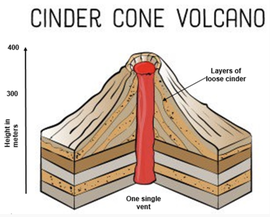
Move from plate setting to eruption style. The original diagrams and videos allow students to compare volcano shape, magma chemistry, viscosity, explosivity and the primary and secondary hazards produced.
- Low-viscosity basaltic magma commonly produces broad shield volcanoes and effusive eruptions.
- Gas-rich, viscous magma at subduction zones produces steeper composite volcanoes and more explosive eruptions.
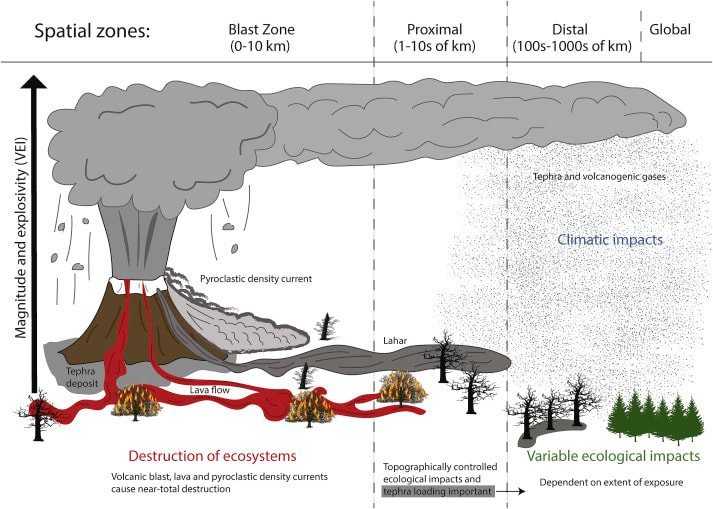
- Pyroclastic flows, ash, lava and gases are primary hazards; lahars and landslides may extend the impact after an eruption.
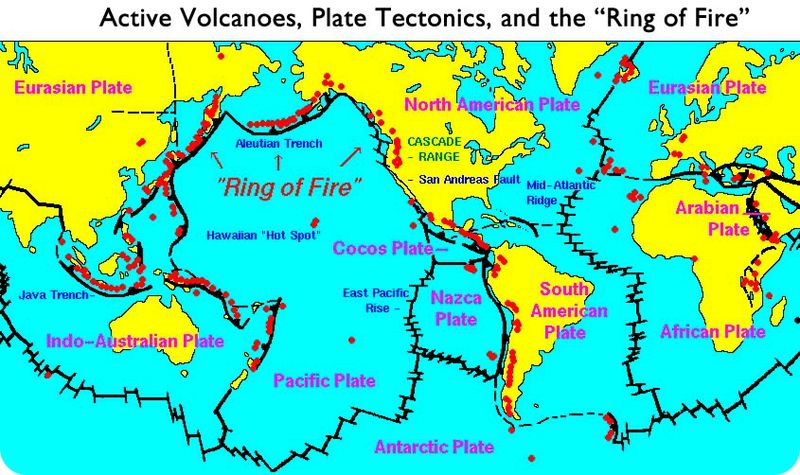
- Global volcanic distribution largely follows plate margins, but hot spots explain important exceptions.
Compare volcano type, process and hazard
- Complete the original activity, then construct a comparison table for shield, composite and cinder-cone volcanoes.
- For each type, include plate setting, magma, eruption style, shape and dominant hazards.
- Use the live volcano map to identify one current example of each possible type and record its location.
- Annotate the volcanic-impact diagram to distinguish primary from secondary hazards.
Watch: Volcano types and formation
Watch: Shield volcanoes
Watch: Composite volcanoes
Watch: Cinder cones and eruption products
Watch: Pyroclastic flows
Watch: Lahars and volcanic mudflows
Watch: Volcanic landslides and secondary hazards
Quizlet: Volcano key terms
Characteristics of Earthquakes
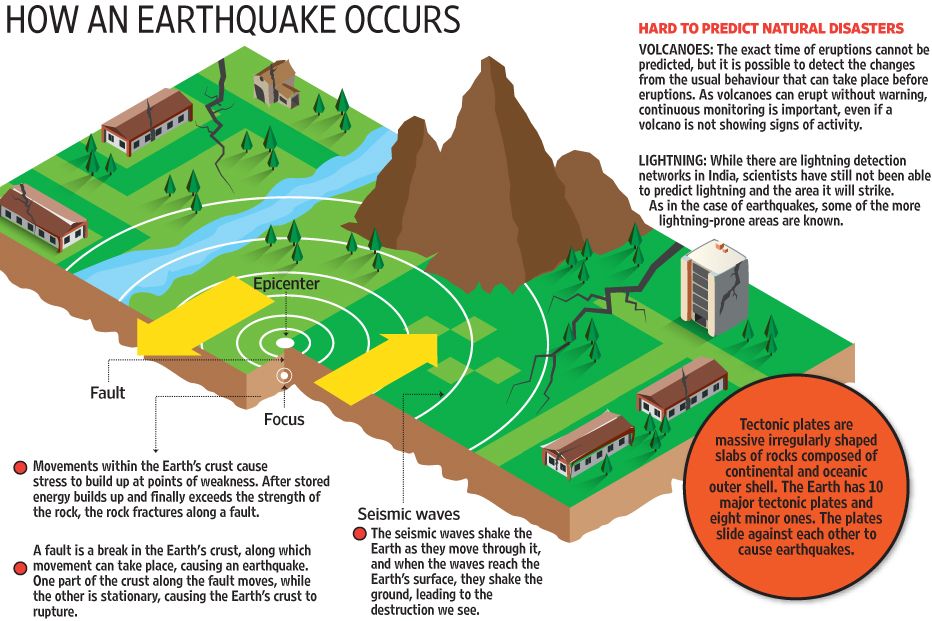
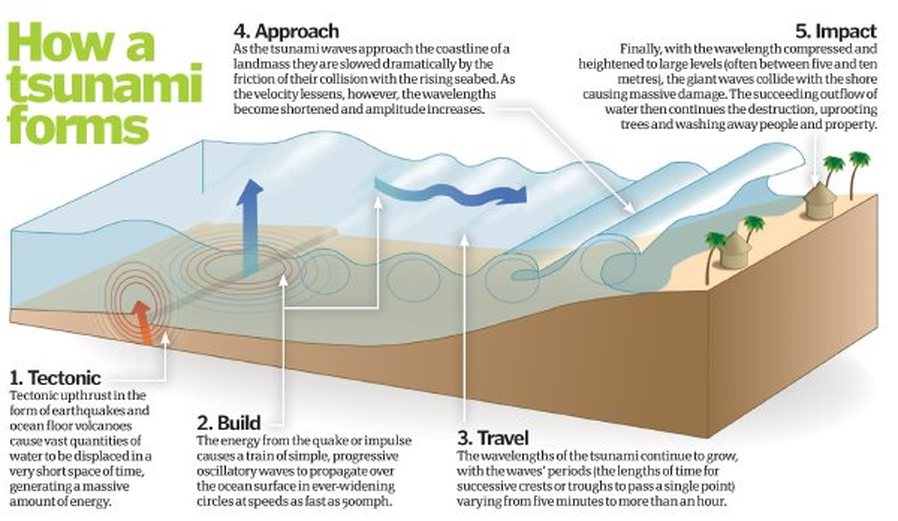
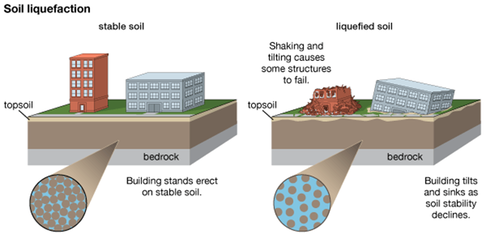
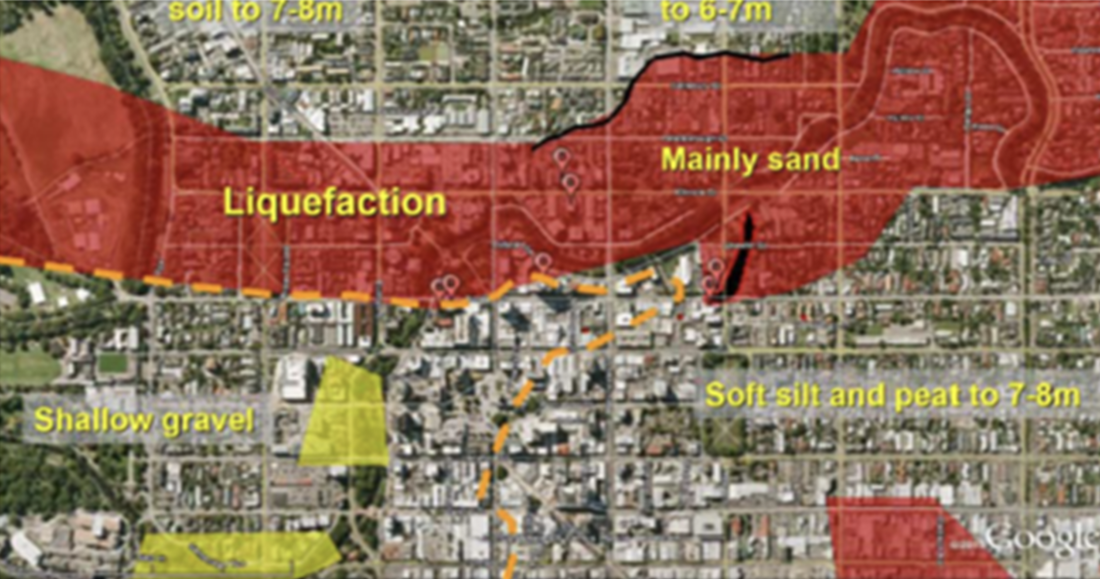
Characteristics of earthquakes (depth of focus, epicentre and wave types) caused by varying types of plate margin movement and human triggers such as dam building and resource extraction; and associated secondary hazards including tsunami, landslides, liquefaction and transverse faults.
Follow energy from the focus to the surface, then distinguish earthquake characteristics from the secondary hazards that transform a physical event into a disaster.
- Earthquakes release stored strain along faults; focus depth and wave type influence the shaking experienced at the surface.
- P, S and surface waves travel differently and reveal both earthquake behaviour and Earth structure.
- Reservoir loading, fracking and resource extraction can trigger or intensify seismic activity.
- Tsunami, landslides and liquefaction depend on local physical conditions as well as earthquake magnitude and depth.
From earthquake anatomy to cascading hazards
- Use the earthquake graphic and gap-fill to label the focus, epicentre, fault and wave paths.
- Complete the anatomy game, then explain why shallow-focus events often produce stronger surface shaking.
- Create a flow diagram showing how one submarine earthquake can generate a tsunami and how saturated sediment can liquefy.
- Use the 2004 Asian Tsunami reading to add located evidence and evaluate the role of preparedness.
Watch: Earthquake anatomy: focus and epicentre
Watch: Seismic waves
Watch: Faults and plate-margin earthquakes
Watch: How tsunamis form
Watch: Tsunami propagation and coastal impact
Watch: The 2004 Indian Ocean tsunami
Watch: Earthquake-triggered landslides
Watch: What causes liquefaction?
Watch: Liquefaction in practice
Watch: Human-triggered earthquakes
Watch: Reservoirs, extraction and seismic risk
Watch: Earthquake hazards synthesis
Classification of Mass Movements
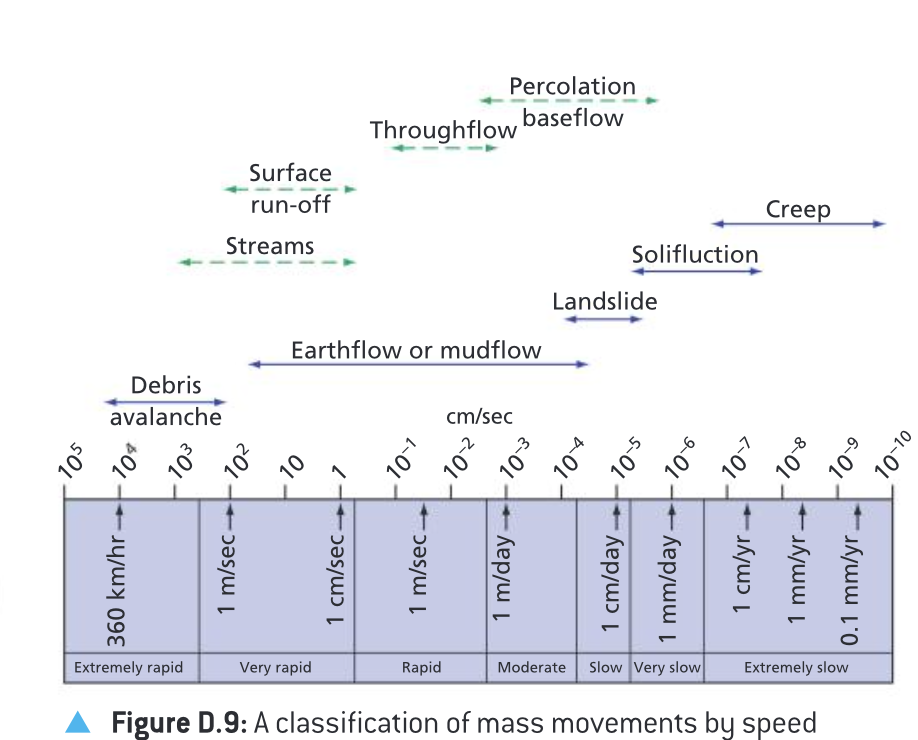
Classification of mass movement types according to cause (physical and human), liquidity, speed of onset, duration, extent and frequency.
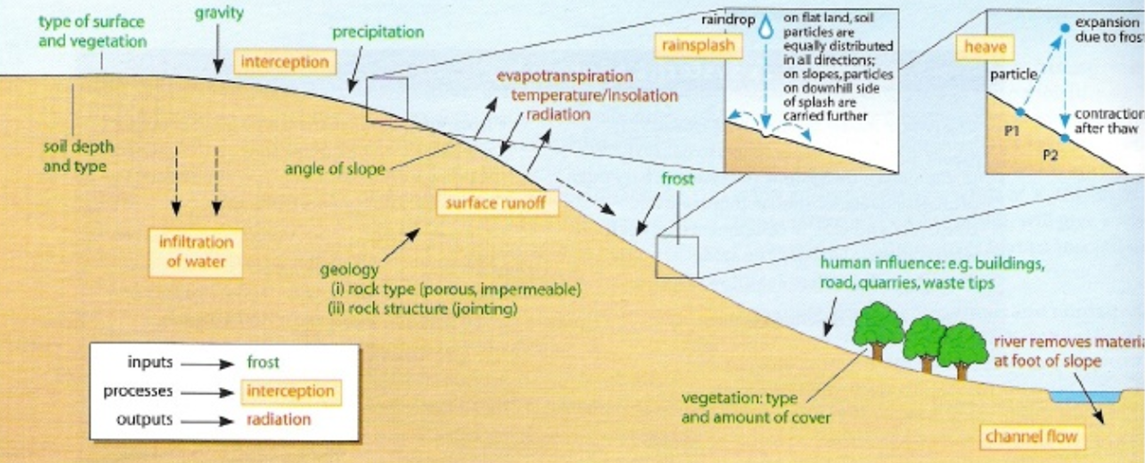
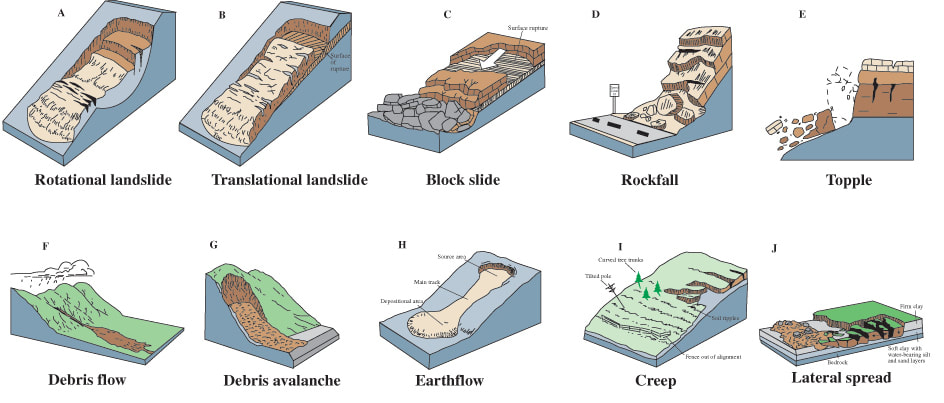
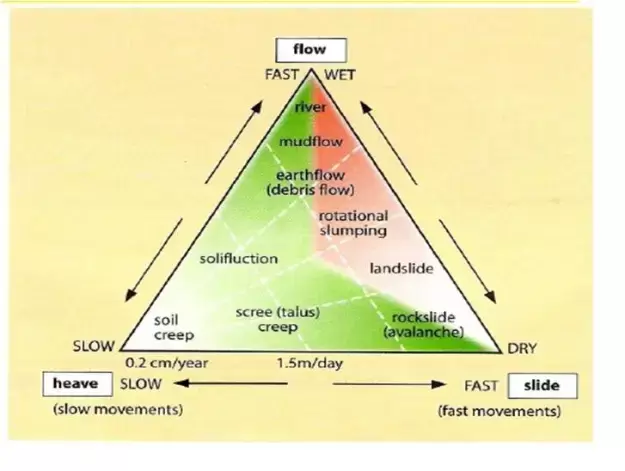
Classify mass movements systematically rather than treating every slope failure as a landslide. The original diagrams show how material, water and movement style create contrasting hazards.
- Falls, slides and flows differ in movement, material, water content and speed.
- Slope angle, geology, weathering, saturation and seismic shaking are important physical controls.
- Deforestation, excavation, road building, mining and poorly managed drainage can destabilise slopes.
- Frequency and magnitude must be considered alongside onset speed, duration and spatial extent.
Create a mass-movement classification key
- Read the embedded activity and use the diagrams to identify the major types of mass movement.
- Classify each by material, liquidity, speed of onset, duration, extent and frequency.
- Add at least two physical causes and two human causes to every relevant category.
- Test the classification using the interactive diagram quiz, then write a justified comparison of a rapid flow and a slow movement.
Watch: Mass movements overview
Watch: Falls, slides and flows
Watch: Physical and human causes of slope failure
Watch: Mass-movement classification review